All episodes
Adam Nash Explores the Art of Process-Strategy Fit at eBay and LinkedIn, with a Side of Diet Coke and Legos
Hosts:
Joff Redfern & Fareed Mosavat
Topics:
Process-Strategy-Fit, LinkedIn, Ebay, and Diet Coke
Listen on
Spotify | Apple | Pandora | Amazon Music | TuneIn
Adam Nash Explores the Art of Process-Strategy Fit at eBay and LinkedIn, with a Side of Diet Coke and Legos
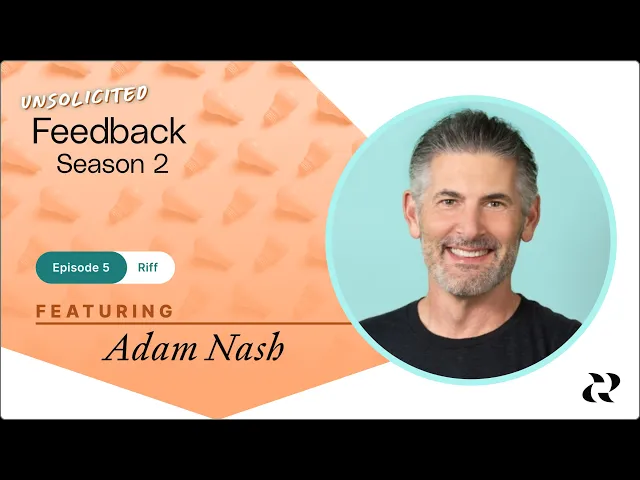
On the latest episode of Unsolicited Feedback, hosts Fareed Mosavat and Joff Redfern are joined by the esteemed Adam Nash, CEO and Co-Founder of Daffy, a philanthropic platform championing the concept that everyone should get in the habit of giving back. Adam's illustrious career spans across tech giants like Greylock, Dropbox, Wealthfront, LinkedIn, eBay, and Apple, and he's widely recognized for his insightful contributions on his blog, PsychoHistory.
Our journey begins with a nostalgic look at the pioneering days at LinkedIn and eBay, where we discuss the intricacies of process creation and leadership dynamics.
Stay tuned for our upcoming episode where we'll delve into the Fintech sphere, diving into the nuances of prioritization and competitive analysis.
But for now, let's kick things off with a discussion on Diet Coke.
🥤 Diet Coke vs Diet Pepsi 🥤
Adam Nash is not just a fan of Diet Coke; he's also the author of a very popular Quora entry that demystifies the allure of this beverage. According to Nash, the distinction between Diet Coke and its counterparts isn't mere marketing fluff. Instead, it's rooted in strategic product decisions that set Diet Coke apart. Directly from Adam,
“Diet Pepsi is largely based on the formula for regular Pepsi, with the high fructose corn syrup replaced by an artificial sweetener (Nutrasweet).
Diet Coke is a unique recipe, not based on Coca Cola, with a different balance of sweetness and flavors.
As a result, Diet Coke is an immensely popular beverage with a unique following, typically #3 in the US based on sales volume (after Coke & Pepsi). Diet Pepsi rarely ranks in the top 5.”
🎛️ Finding the Untapped Potential: Coke Freestyle Machine Edition 🎛️
The Coke Freestyle machine transcends its role as a mere beverage dispenser, transforming into a treasure trove of data. Adam Nash was passionate about securing one for LinkedIn’s office in its nascent stages, a time when such machines were exclusive to cinemas and large venues. However, Adam’s interest in the Freestyle machine went beyond its novel flavor fusion capabilities. He was intrigued by its embedded memory chips, recognizing them as potential data mines. At LinkedIn, he envisioned comparing drink preferences across different departments, like Sales versus Product, though the planned hackathon to delve into this data never came to fruition.
Adam’s aspiration is that Coca-Cola is leveraging this valuable data. He views the Freestyle machine as an ingenious method to capture unfiltered consumer preferences. Could it be that combinations like Fanta and Root Beer are surprisingly popular? The data harvested from these machines could be a goldmine for Coca-Cola, revealing regional taste patterns, pioneering new flavor pairings, and potentially forecasting upcoming trends.
🧱 LEGO, LinkedIn, and Learning 🧱
Next, our conversation shifted from Diet Coke to Legos. Adam recounted the challenge of constructing a massive 10,000-piece LEGO model of the LinkedIn logo, from which two crucial insights emerged.
He discovered that any project with substantial complexity will likely be 10 times more complicated than initially anticipated. What's the upside? The immense learning curve. Adam encountered product limitations, such as the inability to order more than 999 pieces at once, faced structural hurdles during assembly, and had to engineer a moveable base to ensure the creation wouldn’t be a permanent fixture on his desk.
More than just assembling an impressive structure, Adam's LEGO endeavor was a means to nurture a culture of innovation and creativity within LinkedIn. He aimed to cultivate an environment where employees could engage in meaningful and stimulating projects. The takeaway? Cultivating a company culture extends beyond espoused values; it's about crafting enriching experiences that integrate employees into the broader vision and mission.
Navigating Process-Strategy Fit in Tech
After our surprising exploration of Coca-Cola and Legos, the trio moved on to discuss Adam’s vast career journey. A focal point was his work under a variety of operators and process philosophies. In this part of the conversation, we examine what strategies and processes worked and why. We also introduce a new term: “Process-Strategy-Fit.” This concept examines whether the methodologies, the operating structure, and the processes employed by a company align with its current strategy and product objectives.
eBay: A Lesson in Data-Driven Efficiency
At eBay, Nash encountered a process-heavy environment, brimming with data-driven decisions. This approach, while operationally sound, sometimes missed the mark on delivering impactful product outcomes. The experience at eBay was a testament to the need for a balance between process rigor and product agility.
Web 2.0: The Power of Public Discourse
The rise of Web 2.0 opened fresh avenues for sharing and learning, yet many were uncertain about where to begin or what Web 2.0 meant for product leaders. This is where Adam's blog came into play. Adam clarifies that his blog wasn’t intended to garner a following but was a tool to help him comprehend the shift. Writing served to crystallize his thoughts, with influencing wider conversations emerging as an unintended yet valuable byproduct.
LinkedIn: Integrating Product and Growth
At LinkedIn, Nash and his team aimed to integrate growth mechanisms directly into the product, moving away from the isolated marketing strategies of the past. Consequently, the product development process evolved, placing more responsibilities within the product team’s scope and adopting quicker cycles to accommodate the influx of new data. This era underscored the importance of a process that not only aligns with the strategic vision but also promotes innovation and adaptability.
The Takeaways:
🦾 Market Shifts → Process Shifts
Looking back, from desktop to mobile, each phase brought insights into the critical interplay between process efficiency and product efficacy. The industry’s shift towards more agile, user-centered processes marks a broader evolution in the pursuit of optimal process-solution fit.
🎮 Know Your Game
Every product is engaged in its own strategic game, pursuing specific goals. A leader's initial task is to articulate this game clearly to the team. What’s the objective? Enhancing user experience, boosting engagement, or introducing innovative features? Regardless of the goal, it's crucial to ensure alignment across the team. Moreover, it's vital to remain vigilant about strategic changes, keeping the team informed about the current game in play.
📊 Keep Score
Once you've defined your game, the next step is to establish how you'll measure success. This is your scorecard. It could be user metrics, revenue growth, or customer satisfaction scores. The important thing is to have a clear, quantifiable way to track your progress.
🔄 The Iteration Dilemma
The web era has conditioned us to value fast iterations and constant updates. But is this always the best approach? Not necessarily. Sometimes, a more packaged, coherent product approach can yield better results. For example, constant changes in enterprise businesses are almost always a nightmare. It's all about finding the right balance for your product and your customers.
🎯 Process-Strategy Fit
Ultimately, the success of your output hinges on achieving a Process-Strategy Fit. This means aligning your process with your strategic goals and tailored to the specific needs of your product and customer base. It's about ensuring that every step you take brings you closer to winning your game.
Want to read more on this? We encourage you to check out Adam’s PsychoHistory blog. “Be a Great Product Leader” is closely related to some of the key themes of today’s discussion and “Guide to Product Planning: Three Feature Buckets” will always be a must-read.